|
1
|
- L.D. Alford
- Session 2: Paganism and the Egyptian Pantheon
- www.lionelalford.com
- www.ldalford.com
- www.aegyptnovel.com
|
|
2
|
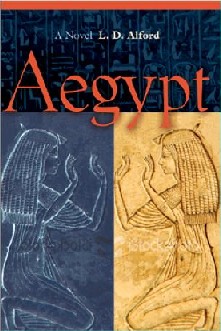
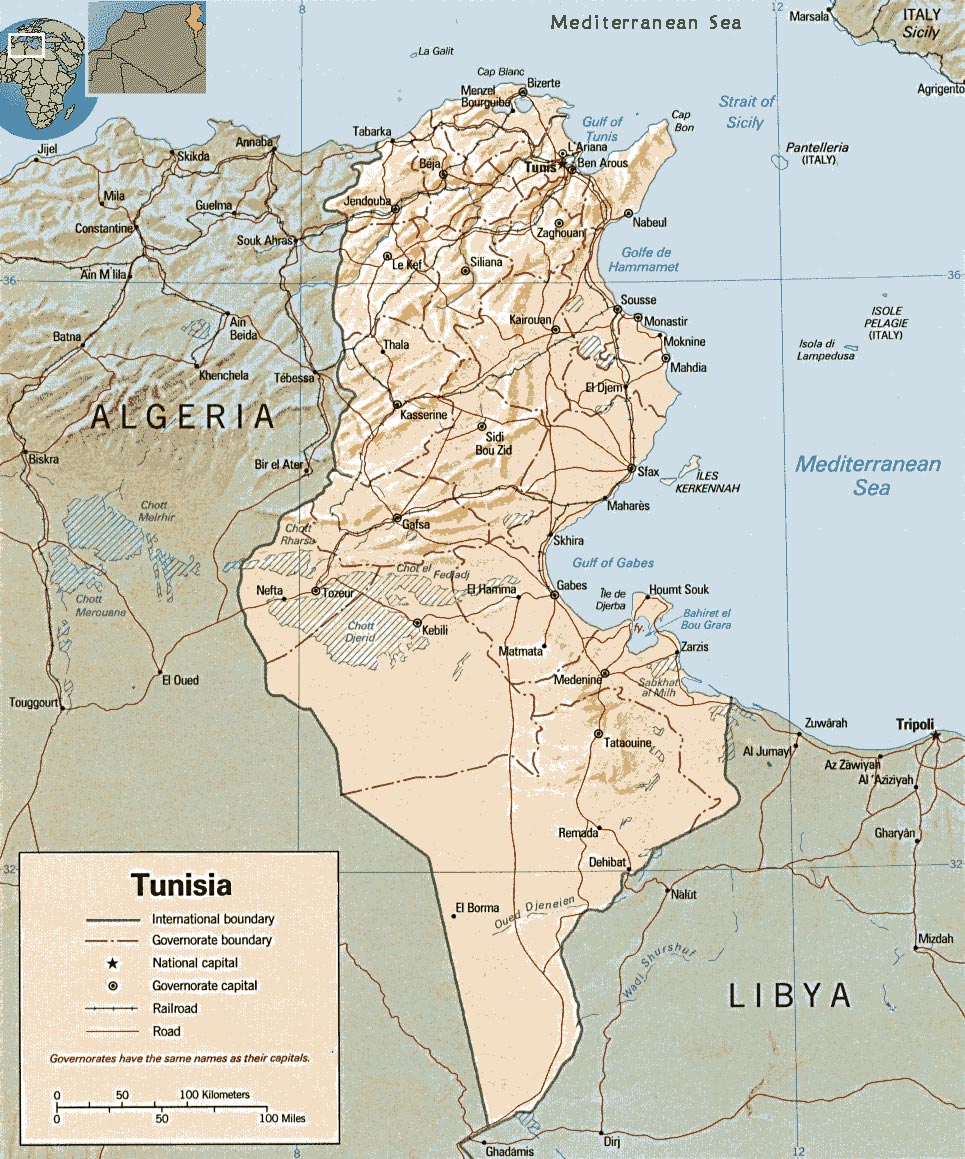
- Aegypt
- Historical fiction novel with a fantasy/suspense driver
- Idea 1992, start 1992, finished 1994
- Published by Copestone in Jan 08
- Follows Lieutenant Paul Bolang
- Time July-Nov 1926
- Location Tunisia (French Colony)
|
|
3
|
- 1. Novel, characters, history, politics
- 2. Paganism and the Egyptian pantheon
- 3. Egyptian life
- 4. Egyptian hieroglyphics
- 5. Egyptian tombs and constructions
- 6. Legion Etrangere, French Foreign Legion
|
|
4
|
|
|
5
|
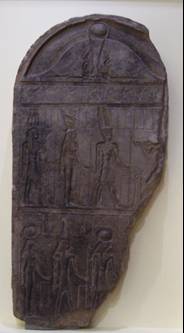
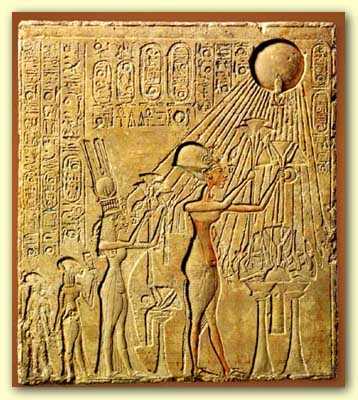
- Unusually, the women held scepters and wore Imperial crowns. The woman
on the left held the divine scepter and wore a sun-disk crown of Ra the
sun god. Below and to the left of her throne was a depiction of Ra
himself. The woman on the right held the scepter and flail and wore the
crown of Osiris the god of the dead, and to the right and below this
figure was a depiction of Osiris.
- The entire pantheon of the early kingdom was portrayed in the area
beneath the thrones. The figure of Ra was followed by Bastet, Khnum,
Thoth, Apis, Sobek, Anubis, and then Osiris. Strangely, Horus, the
symbol of the Pharaoh’s divinity was not included.
|
|
6
|
|
|
7
|
|
|
8
|
- Religion guided every aspect of life
- Polytheism, worship of many deities
- Except during reign of Akenaton
- As many as 2000 gods and goddesses
- Some, such as Amun, worshipped throughout the whole country
- Others had only a local following
- Often gods and goddesses represented as part human and part animal
- Example, Horus, the sky god, head of a hawk, and body of a human
|
|
9
|
- Animals such as the bull, the cat, and the crocodile to be holy
- Their two chief gods
- Amon-Ra
- Sun god
- Lord of the universe
|
|
10
|
- Osiris
- God of the underworld
- Stories about him revolved around idea of immortality
- Made peaceful afterlife possible
- The Egyptian "Book of the Dead" contains the major ideas and
beliefs in the ancient Egyptian religion
- Because their religion stressed an afterlife, Egyptians devoted much
time and wealth to preparing for survival in the next world.
|
|
11
|
- Egyptians had many tales about how the world began
- According to one legend
- Started with an ocean in darkness
- Then a mound of dry land rose up and the sun god Ra appeared
- Ra created light and all things
- Another version, Sun god emerges from a sacred blue lotus that grew out
of the mud
- Third version, Ra appears as a scarab beetle on the eastern horizon.
|
|
12
|
- Temples considered dwelling places for
gods
- They were everywhere
- Each city had temple built for god of city
- The purpose of the temple was to be a cosmic center by which men had
communication with the gods.
- As priests became more powerful, tombs became a part of great temples
|
|
13
|
|
|
14
|
- Priests duty was to care for the gods and attend to their needs
- No Contact with people - Priests did not preach, proselytize, or care
for a congregation, their duties were:
1) Perform material and ritually magic services to the god of
his temple
2) Perform funeral rites for the dead
|
|
15
|
|
|
16
|
- Servants of gods - The daily temple rituals was performed to honor the gods
by paying them courtesy and respect
- 1- At dawn the priests would intone a hymn that began "Awake in
peace, great god" and open the sanctuary door, where the statue of
the god was housed
- 2- A ritual prayer would be spoken four time over the image of the god,
giving the gods back his soul so that he could reassert his physical
earthly shape.
|
|
17
|
- 3- god's image was cleansed, rubbed with oil, purified, incense burned
to fumigate the sanctuary. Image re-dressed in new linen garments of
white, red, blue and green colors, perfumes and cosmetics applied to
his face, and adorned with jewels.
- 4- Breakfast meal was then laid out before the shrine and god. Baskets
of fruit and jars of beer and wine. All offerings were prepared in temple
kitchens, no blood was spilt on god's altar, nor was the animal
slaughtered in the sight of god.
|
|
18
|
- 5- Once the god had his fill, the food was removed, and then returned
to the kitchens to be distributed as wages to the temple personnel. The
image and the entire sanctuary was then sprinkled with water, five
grains of natron and resin were placed on the floor, and more incense
wafted. The doors of the sanctuary were then closed and resealed.
|
|
19
|
- Death transitional stage in progress to better life in next world.
- Believed reach full potential after death
- Each person thought to have 4 parts
- “ha (body)”
- "ka (life force)”
- "ba (soul)“
- "akh (immortal body)"
|
|
20
|
- For these to function properly, considered essential for the body to
survive intact
- Entire civilization of Ancient Egypt based on this idea
- Belief in rebirth after death driving force behind their funeral
practices
|
|
21
|
- When a person died
- Priests recited prayers
- Final attempt made to revive deceased
- Body was washed and purified in a special shelter called an ibu
- Body taken the wabet, embalmer's workshop
- A cut was made in the left side
- Organs removed
- Stored in canopic jars
|
|
22
|
- Body packed with a “salt” called natron for forty days
- Natron is a naturally occurring mixture of sodium carbonate
decahydrate (Na2CO3·10H2O, a naturally occurring form of soda ash) and
about 17% sodium bicarbonate (also called nahcolite[1] or baking soda,
NaHCO3) along with small quantities of household salt (halite, sodium
chloride) and sodium sulfate. Natron is white to colorless when pure,
varying to gray or yellow with impurities. Natron deposits occur
naturally as a part of saline lake beds in arid environments.
Throughout history, natron has had many practical applications, which
still resonate in the wide range of modern uses of its constituent
mineral components.
|
|
23
|
- Insides filled with linen or sawdust, resin and natron
- Body wrapped in bandages with jewelry and amulets between the layers
- Portrait mask placed over the head of the deceased by the Chief
Embalmer, who wore a jackal mask to represent Anubis.
- Wrapped body, or mummy, put into a plain coffin
|
|
24
|
- After about 70 days
- Mummy placed in a decorated coffin
- Furniture, carved statues, games, food, and other items useful to next
life prepared to be buried with mummy
- Last ritual performed by priest on mummy
- Called the "Opening of the Mouth“
- Ceremony to magically give deceased ability to speak and eat again,
and have full use of body
- Allowed “ka” back into now prepared body
- Place mummy in sarcophagus, seal tomb
|
|
25
|
- Deities in pantheon played different, and at times conflicting, roles
- Lioness Sekhmet sent out by Ra to devour humans that rebelled against
him, later became fierce protector of kingdom, life in general, and
sick
- More complex roles of Set
- Easy to cast Set as arch villain, source of evil
- Set earlier role of destroyer of Apep, service of Ra on his barge, and
thus upheld Ma'at (Truth, Justice, and Harmony).
|
|
26
|
- Origin myth, in beginning, universe
filled with primeval waters of chaos, god Nun
- God, Re-Atum appeared from Water as land of Egypt appears every year out
of the flood waters of Nile
- Re-Atum spat, out of spittle came out
deities Shu (air) and Tefnut (moisture)
|
|
27
|
- World created when Shu and Tefnut gave birth to two children: Nut (Sky)
and Geb (the Earth)
- Humans created when Shu and Tefnut went wandering in dark wastes and got
lost.
- Re-Atum sent his eye to find them
- On reuniting, his tears of joy turned into people
|
|
28
|
- Geb and Nut copulated
- Shu's learning of his children's fornication
- Separated the two
- Effectively air between sky and ground
- Also decreed pregnant Nut should not give birth any day of the year
- Nut pleaded with Thoth, who on her behalf gambled with moon-god Yah
and won five more days to be added onto then 360-day year
- Nut had one child on each of these days: Osiris, Isis, Set, Nephthys,
and Horus-the-Elder
|
|
29
|
- Osiris, different accounts, either son of Re-Atum or Geb
- 1st Pharaoh of Egypt
- Brother Seth chaos of universe
- Murdered Osiris tricked him to fit inside a box, nailed shut and threw
into Nile
- After killing Osiris, Seth tore body into pieces
- Isis rescued most of pieces for burial beneath temple, but first she
resurrected Osiris so she could copulate with him
|
|
30
|
- Birthed their child Horus
- Seth made himself pharaoh
- Challenged by Osiris's son – Horus
- Seth lost and sent to desert
- Osiris mummified by Isis and became god of the dead.
- Horus became the pharaoh and from him descended the pharaohs
|
|
31
|
|
|
32
|
|
|
33
|
|
|
34
|
|
|
35
|
|
|
36
|
|
|
37
|
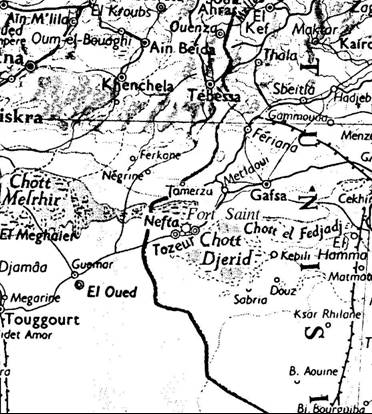
- Fort Saint
- Chott Djerid
- Chott Melrhir
- Tozeur
- Nefta
- Tomerzu
- Sabria
- Douz
|
|
38
|
|
|
39
|
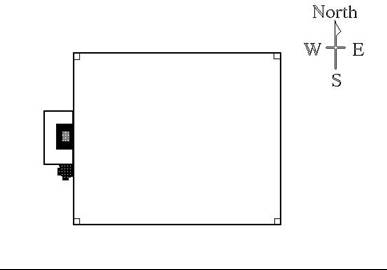
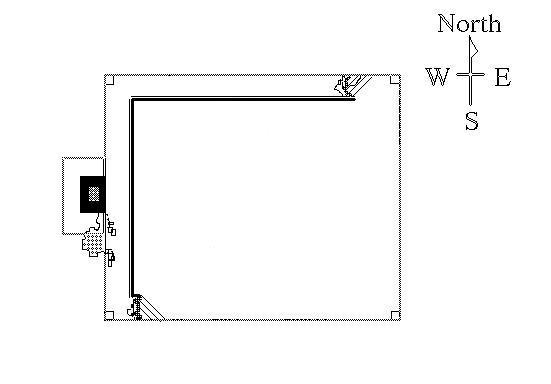
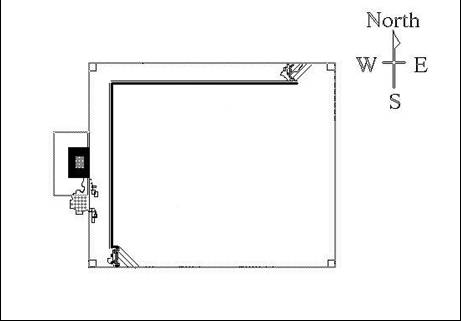
- Beginning of the dig
- Breakthrough
- Discovery of the corridors
- The basalt plug
- The seal on the basalt plug
- The northern corridor
- The rubbing
|
|
40
|
|
|
41
|
- The rubbing
- The discovery of the northern entrance
|
|
42
|
|
|
43
|
- Paul sat up late in the relative cool of the evening and studied the
rubbing of the stone plug. In the flickering light of his kerosene
lamps, more fervently than on the actual slab of basalt, the figures
leapt out at him. They were so real—so clear. Much more realistic than
most of the Egyptian art of the period in which Audrey placed the
structure.
- The beauty of the women who sat on the intricately carved thrones was
incredible. They looked like two beings turned out of the same
mold—twins perhaps. The only difference between them Paul discerned was
the slight smile of the woman on the left and the obvious frown of the
woman on the right. Interestingly, the smile of the woman on the left
was as open as the frown of the woman on the right was secretive. And
though the similarity of the faces was obvious, that slight difference
of expression gave them two entirely different personalities.
- Paul could understand why the ancients had made a deity of such beauty.
|
|
44
|
- Already he marked and separated each rectangular sentence of
hieroglyphic drawings and began his own translation of the inscriptions,
but so far, he was largely unsuccessful. The only pictograms he
positively identified were visuals and determinatives, which didn’t
represent sounds or parts of words at all. A determinative specified the
meaning of a depiction of a group of hieroglyphics, and a visual was a
hieroglyph with a specific and separate meaning of its own. The visuals
were all the common names of the deities on the stone. Paul identified
each of the gods along with the single hieroglyph depiction of their
names, plus two other visuals. The other two that he positively
translated were the symbols inscribed before the faces of the enthroned
women. This was the usual place reserved for the name of the enthroned
deity or person. The names were not those of any Egyptian deity or ruler
Paul ever heard of before.
|
|
45
|
- The name of the woman on the left was “light,” and the name of the woman
on the right was “darkness.” The stone made no elaboration of the
symbols as if the identification, like that of the deities below, was in
itself sufficient.
- Paul laced his fingers in front of his face and rested his chin on his
thumbs. Something. The curtains fluttered with the night breeze. He
pulled slowly at his lip. Why light? Wasn’t Ra the god of light? No! Ra
was the god of the sun. Light was a separate idea quite exclusive of the
sun. Light was embodied in anything that gave it off or reflected it, a
lamp, the moon, certain insects, the sun itself....
|
|
46
|
- It was not at all odd to imagine light deified. Paul was surprised, when
he thought of it, that as advanced as they were, the Egyptians hadn’t
had such a deity, but then, perhaps they had. Darkness, as well, was not
just the absence of light, but a malevolent ruler of the unseen and the
unknowable. Incredible. What made him think of malevolent? Perhaps the
fact that living man would never choose to function in darkness. Light
was a requirement for life and existence, yet a continual contest
endured between the two. Man’s lights, Ra’s light dispelled the darkness
until the tomb, and then even Osiris, the god of the dead, was at the
mercy of darkness. No man or god could resist darkness then. The
Egyptians’ division of their pantheon made sudden sense to him. Why was
there never any reference in Egyptian temples and monuments to these
deities? Why only here? Had all the references to them been eradicated
from Egypt the way many Pharaohs desecrated and removed the names and
statues of their predecessors after death?
|
|
47
|
- Paul looked back at the rubbing. In the hazy light, the designs were
unfocused, and it took his eyes a minute to make them clear.
- “Wait.” He shook his head. Paul squinted at the designs, then took the
sheet of paper and tacked it to the door. From where he stood at the far
end of the room, the designs ran together and formed a set of
hieroglyphic visuals with determinates. On the top was the glyph
representing Osiris with a split determinate showing motion going away.
Below this, separated by the line formed by the names of the pantheon of
Gods was the glyph representing Ra also with a split determinate. The
determinate following Ra, however, demonstrated motion coming toward.
These were the hieroglyphics with the clearest meaning in the entire
design!
|
|
48
|
- Paul shook his head again. Was he imagining these figures? He stared
again. No, their outlines were clear; he traced them easily in the
design. Paul sat back at his desk, and squinting at the rubbing on the
door, he drew the symbols carefully in his notebook.
- Osiris was the Egyptian god of the dead and death. The determinate
showed Osiris, that is, death going away. “Death going away,” Paul
whispered. It didn’t make sense. The second set of symbols was not as
easy to understand. Ra. What did Ra represent—the sun? Not light. No,
not light, but warmth, the breath from a man’s nostrils, the essence of
life itself. Not just light, but life. Ra was life. The determinate
indicated “moving toward”—in other words, coming.
- “Life coming,” Paul spoke aloud. Perhaps put together the symbols meant:
death is going away; life is coming.
|
|
49
|
- Paul felt the hairs on the back of his neck prickle. Death going and
life coming. These were the only clear hieroglyphics in the whole piece
of stone. Was it just his imagination, or was this statement the message
of the stone? Paul smiled. He laughed. How foolish. Like seeing bogeymen
in every corner. Yet, still—death going and life coming.
- What could it mean? Just more of The Egyptian Book of the Dead claptrap?
Or was it more? The theology of the Egyptian beliefs was still vaguely
defined during the probable age of this structure. Their patterns of
belief never included a complete rebirth to life. It was solely an
entrance into the land of the dead.
- Paul was certain that if he could understand the pictograms and drawings
on the walls of the corridor below the foundation, he would be able to
resolve the entire mystery. But why were the symbols so disconcertingly
untranslatable? Their meaning almost seemed purposely concealed.
|
|
50
|
- “You won’t believe it, but this morning a piece of the shoring came
loose and crashed into the carving of that temple you and I had been
studying so carefully yesterday.” He paused for breath. “I was busy
cursing out the fool who put the framing together so poorly when I
noticed a thin tracery around the edges of the inscription. The jolt of
the wooden beam was enough to dislodge some mortar from the wall. I
looked more closely, and it became obvious that a fine line of mortar
had been used to conceal the edges of what, at first, looked like
building stones. But the mortar wasn’t just concealing the seams of the
building stones. It is stone all right, but it’s not a building stone.
With a gentle force, I was able to
move the entire block a few millimeters inward.” He paused dramatically.
“I think we’ve discovered a plug or a doorway. Williams and Parrain are
holding back the natives. They’re all champing at the bit to open the
thing, but I don’t want the carving damaged any more than it has been. I
thought your presence would bring about a modicum of control.”
|
|
51
|
- Overview of the Novel
- Not finished…
- Give you a chance to catch up
- Met the major characters
|
|
52
|
|

 Notes
Notes